Landscape Drivers Explain Changes In The Water Cycle - A Landscape
Put simply water evaporates from the land and sea which eventually returns to Earth as rain and snow. In order to manage our water resources there is a need to understand how climate change and land use change impact on Victorias water resources.

Although the total amount of water within the cycle remains essentially constant its distribution among the various processes is continually changing.

Landscape drivers explain changes in the water cycle. Furthermore agreement is widespread that these changes may profoundly affect atmospheric water vapor concentrations clouds precipitation patterns and runoff and stream flow patterns. 3113 The carbon cycle Global distribution and size of major stores of carbon lithosphere hydrosphere cryosphere biosphere atmosphere. Here we present hydroclimate changes over the past 160000 years reconstructed from analyses of the provenance of terrestrial sediments in a marine sediment record from the Gulf of Sirte.
The water cycle also known as the hydrologic cycle or the hydrological cycle describes the continuous movement of water on above and below the surface of the Earth. Based on this approach development the thesis identifi es hydroclimatic change signals of landscape drivers against the background of multiple coexisting drivers infl uencing worldwide freshwater change within and among hydrological basins. Students will observeinvestigate the movement of water through the different stages of the water cycle and determine what drives the water cycle.
Water is stored in three states. Landscape data for identifi cation of water change drivers and eff ects expanding the approach application from local to continental and global scales. These can impact the natural environment in many ways.
Global climate change will affect the water cycle likely creating perennial droughts in some areas and frequent floods in others. During this process water changes its state from one phase to another but the total number of water particles remains the same. This lesson plan was taken from NASA Preciptation in Education Lesson plan found at httppmmnasagoveducationvideosearths-water-cycle.
The water cycle involves the exchange of energy which leads to temperature changes. Acidification of the oceans is a real and present problem to avoid and the extraction of water has increased by 3 in the last 50 years. This leads to an increase in runoff and a reduction in infiltration.
When water evaporates it takes up energy from its surroundings and cools the environment. There are indications that climate change-induced temperature increases may threaten as many as one in six species at the global level. This project will investigate the role of surface and groundwater systems in the Goulburn and Ovens river catchments - in particular how they respond to changing land use and climate conditions the rivers connection to landscapes and interactions between surface and groundwater systems.
The concept is examined in some detail and each part of the processes including evaporation transpiration condensation precipitation infiltration surface runoff groundwater and absorption is. Permanent features are expected to remain noticeable on the landscape into the. Linear features such as roads power transmission lines seismic lines and pipelines create new corridors that influence human and animal movement patterns.
This cycle is kept in motion thanks to the solar energy and gravity. The coupling processes between terrestrial Carbon Nitrogen and hydrological processes are extremely complex and far from well understood. Hydraulic lift is the passive movement of water from roots into soil layers with lower water potential while other parts of the root system in moister soil layers usually at depth are absorbing.
Direct human changes to the land cover can also have impacts on the carbon and water cycles as well as on the Earths energy balance through changes in surface albedo transpiration and evaporation. Van der Ent also shows that land use changes such as irrigation dams and deforestation can alter evaporation patterns in a region potentially affecting water resources in distant regions. Rising atmospheric CO2 concentrations leading to higher ocean temperatures and ocean acidification are expected to have profound effects upon marine.
Change from natural landscape to urbanised landscape increases impermeable surfaces. Do you know how the water cycle works. The natural water cycle is being affected by changes in climate overexploitation and pollution.
Water is cycled between key stores by a variety of processes at different rates of flux. Of the many processes involved in the water cycle the most important are evaporation transpiration condensation precipitation and runoff. Cities create drainage systems to take water quickly away from the urban environment.
Landscape drivers explain changes in the water cycle New study shows the significant role of landscape-driven water changes mostly caused by human activities in the present state of the global water cycle news June 29 2015. However this can lead to flooding as river levels then receive this water too quickly in a large amount. Human activities can leave landscape features that are present for a long time.
Changes in the water cycle over time to include natural variation including storm events seasonal changes and human impact including farming practices land use change and water abstraction. As liquid water in the oceans river and lakes. These heat exchanges influence climate.
And as atmospheric moisture in the form of gaseous water vapour. Direct driver pathways of climate change are related to changes in climate and weather patterns impacting in situ ecosystem functioning and causing the migration of species and entire ecosystems. Climate change intensifies this cycle because as air temperatures increase more water evaporates into the air.
When it condenses it releases energy and warms the environment.
 The Water Cycle
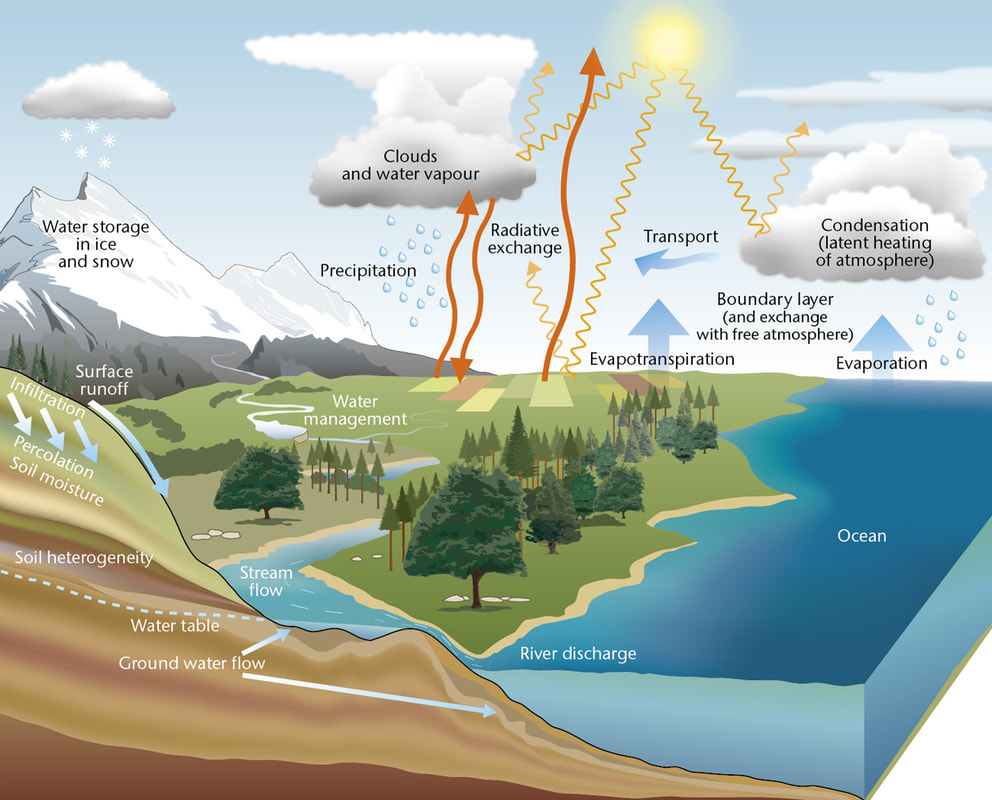 The Water Cycle
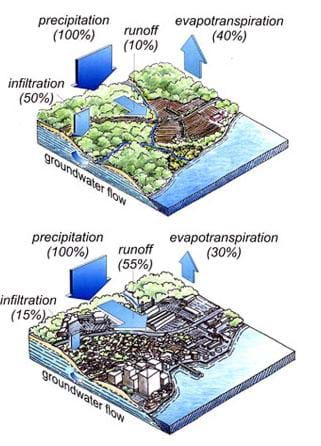 Natural And Urban Stormwater Water Cycles Lesson Teachengineering
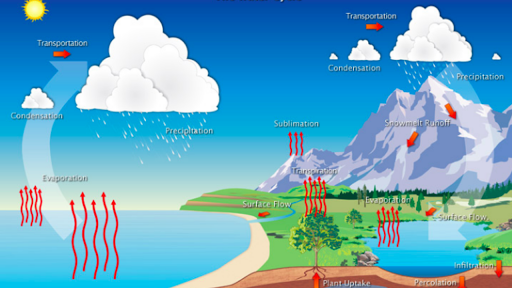
 Hydrologic Cycle An Overview Sciencedirect Topics
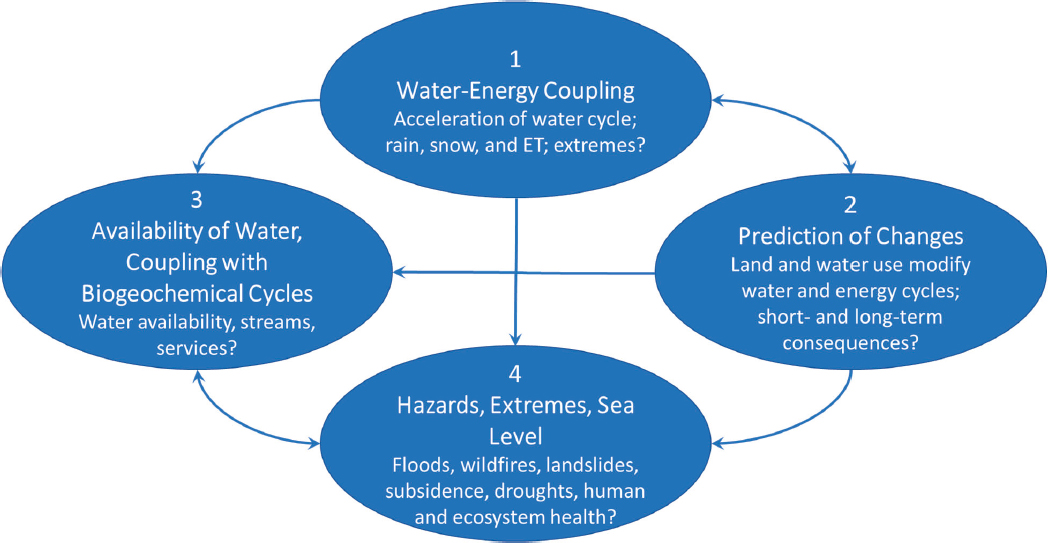 6 Global Hydrological Cycles And Water Resources Thriving On Our Changing Planet A Decadal Strategy For Earth Observation From Space The National Academies Press
 Process Of The Water Cycle From Precipitation To Evaporation Aqwest
 Create Infographics Presentations Reports Piktochart Water Facts Water Bottle Facts How To Create Infographics
 D48ef30fcfb3650c6089450b86d08ae5 Jpg 1650 1275 Traffic Roundabout Street Design
 Metlink Royal Meteorological Society Ecosystem Feedbacks From Carbon And Water Cycle Changes
 Flocabulary Songs The Water Cycle Water Cycle What Is Water Cycle Water Cycle Worksheet
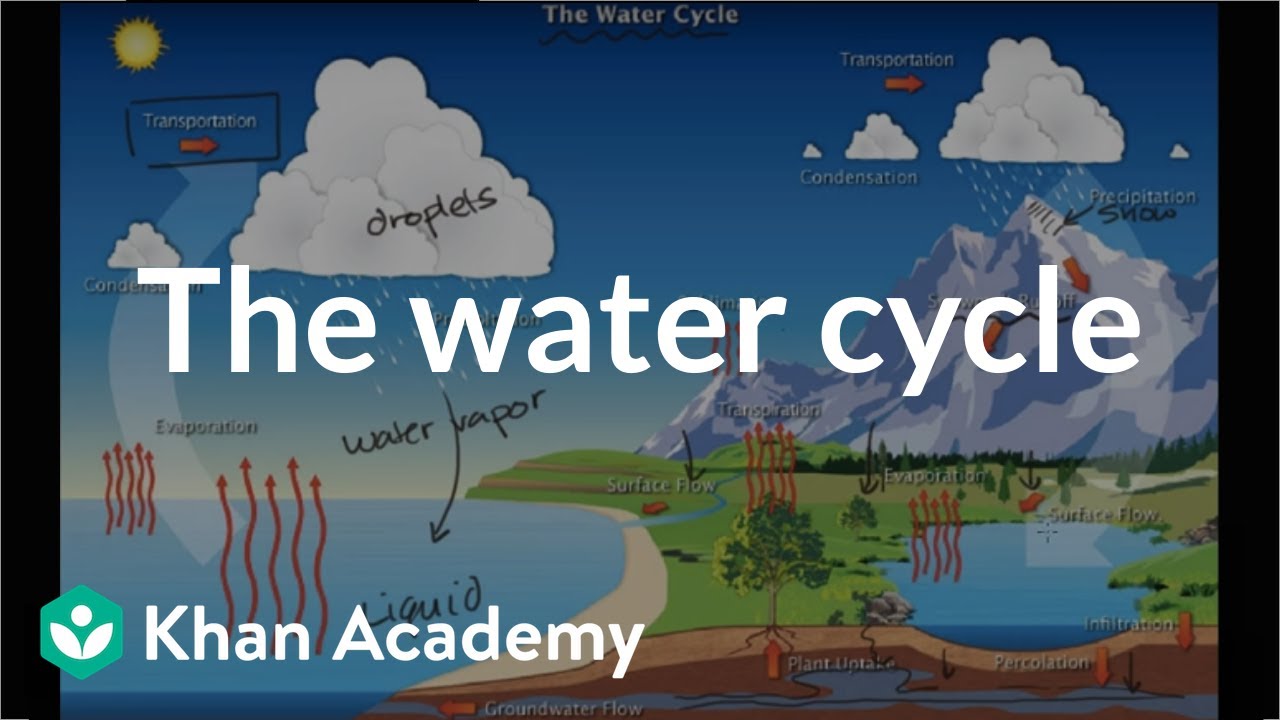 The Water Cycle Video Ecology Khan Academy
 Precipitation And The Water Cycle
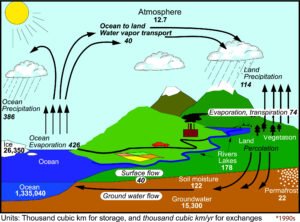 Metlink Royal Meteorological Society The Changing Water Cycle
 Pdf Evaporation In The Global Water Cycle Analysing Land Evaporation Using Satellite Observations
2 The Water Cycle An Agent Of Change Challenges And Opportunities In The Hydrologic Sciences The National Academies Press

 Science Experiment Hydrologic Water Indianapolis Public Library
 Hydrosphere Aspen Global Change Institute

0 Comments